In Pakistan’s dynamic economic landscape — marked by rapid urban expansion, evolving industrial hubs and growing commercial centres — the threat of property-damage incidents such as fire remains significant. Protecting your home, business or industrial premises from fire risk isn’t just prudent; it is increasingly essential. This article outlines what fire insurance is, why it matters in Pakistan, how to select the right policy and how to secure a smoother claims process.
What is Fire Insurance?
Fire insurance is a contract between an insured and an insurer in which the insured pays a premium in exchange for financial protection against losses caused by fire and related perils. In the event of an insured peril, the insurer compensates the policyholder up to the sum insured, subject to policy terms and conditions.
When it comes to Pakistan, fire insurance typically protects residential, commercial or industrial assets — including the structure, contents, stock and equipment — that may suffer damage due to fire, lightning, explosion, smoke or other allied perils. Companies such as The United Insurance Company of Pakistan Ltd. (UIC) emphasize coverage of rebuilding, repair or replacement costs of damaged property.
Why Fire Insurance Matters in Pakistan
Several factors make fire insurance particularly relevant in the Pakistani context:
Electrical faults and short-circuits are frequent in residential, commercial and industrial settings, often due to aged wiring or power supply fluctuations.
Gas installations and kitchen flammable substances in restaurants or commercial kitchens pose heightened risk.
Industrial premises and warehouses often house large quantities of combustible stock or materials, increasing potential for large-scale fire losses.
Densely-populated markets, older building structures, and lack of fire-safety infrastructure in some areas raise exposure. All of these point to the fact that a fire incident can swiftly lead to severe financial consequences — from ruined stock and machinery to permanent closure of business lines or total loss of one’s home.
What Does a Typical Fire Insurance Policy Cover?
While specific terms vary by insurer and policy, most fire insurance plans in Pakistan cover:
Damage to the structure/building caused by fire, explosion or lightning.
Loss or damage of contents, such as equipment, furniture, stock, inventories, fixtures and fittings.
Risks of allied perils: e.g., explosion, impact damage, lightning, riot and strike, malicious damage (depending on the wording).
In some policies, business interruption or consequential loss cover – i.e., loss of profit, increased cost of working – triggered by an insured fire event.
Additional optional coverage may include natural disasters (earthquake, flood), technical breakdown (machinery), terrorism, etc.
Types of Fire Insurance Policies
Businesses and homeowners in Pakistan can choose from a variety of policy forms depending on risk profile and asset type. Typical forms include:
Valued Policy: A pre-agreed sum insured for the property, irrespective of fluctuations in actual market value.
Specific Policy: The policy covers a defined sum insured; if losses exceed that sum, the excess cost is borne by the insured.
Comprehensive/All-Risks Form: Broader coverage, often combining fire and allied perils with other risks such as burglary, machinery breakdown and business interruption.
Floating Stock Policy: Suitable for businesses with stock across multiple locations; covers varying locations under a single policy framework.
Reinstatement/Replacement Cost Policy: Allows for full cost of repair or replacement of damaged property, rather than simply indemnity of market value.
Benefits of Fire Insurance
Opting for fire insurance provides multiple tangible and intangible benefits:
Financial security: It ensures you are less vulnerable to catastrophic loss when a fire or allied peril strikes.
Business continuity: For businesses, cover helps restore operations — replacing stock, equipment, rebuilding premises — and avoids prolonged shutdowns.
Peace of mind: Knowing that your assets are protected gives psychological relief, especially in environments with elevated risk.
Customisation: With appropriate add-ons, the policy can be tailored to cover specific industry-related risks, natural disasters or business interruption.
Regulatory/compliance support: For industrial or commercial entities, insurers often require proof of fire-safety standards – assisting you to maintain safer premises.
How to Choose the Right Policy in Pakistan
When selecting a fire insurance policy in Pakistan, keep the following in mind:
Scope of coverage: Ensure that both the building and contents (and stock/equipment if commercial) are covered. Check whether allied perils, business interruption, terrorism or natural disasters are included or available as adjuncts.
Insurer’s reputation: The strength of the insurer’s financials and its track-record in claim settlement matter significantly.
Premium vs risk: Evaluate the premium relative to value of assets, location risk (e.g., high-hazard area, older building), and likelihood of fire or allied peril occurrence.
Policy wording & exclusions: Study what is not covered: certain kinds of damage, negligence, unreported risk may exclude cover.
Safety standards and compliance: Many insurers expect the insured premises to follow fire-safety norms, have functioning alarms, extinguishers, wiring inspections, etc.
Documentation and ease of claims process: A simpler, transparent claims process will serve you better when a loss occurs.
Embedding Fire & Safety Systems: A Note on Compliance
Beyond insuring your property, ensuring fire-safety compliance is critical — both to reduce risk and to satisfy insurer requisites. Here enters the role of the National Fire Protection Associates of Pakistan (www.nfpapak.org). This organisation offers end-to-end solutions: from designing fire-safety forms, supplying equipment, commissioning and testing systems in alignment with applicable standards required under fire-insurance frameworks. Engaging a qualified fire-safety partner not only bolsters protection but also supports your insurance acceptance, claim readiness and regulatory compliance.
The Claims Process: Step-by-Step
In the unfortunate event of a fire or allied incident, the claims process generally follows these steps:
Immediate notification to your insurer. Prompt communication safeguards against delays or denial.
Preserve the premises from further loss where possible (e.g., stop further damage, secure the property).
Submit required documentation: typically fire brigade / incident report, FIR (if required), photographs of damage, inventory/valuation lists, purchase invoices of contents, surveyor’s report etc.
Insurer’s survey & assessment: The insurer (or appointed loss adjuster) assesses the damage, verifies cause and cost estimate.
Settlement: Following verification and policy terms, the insurer settles the claim up to the sum insured or limit defined.
Recovery / subrogation: If a third-party is responsible for the fire (e.g., neighbouring unit), insurer may pursue recovery.
Understanding these steps and keeping documentation up-to-date (asset register, fire-safety audits) expedites settlement when time matters.
Fire-Safety Best Practices for Risk Reduction
While insurance provides financial cover, the best strategy is to reduce risk in the first place. Consider these measures:
Install and maintain functioning fire-alarms, smoke detectors and auto-shutdown systems.
Ensure adequate fire-extinguishers, hydrants, and exits in commercial/industrial premises; conduct regular drills.
Engage certified professionals (like the National Fire Protection Associates of Pakistan) for system design, commissioning and testing to meet insurance and regulatory standards.
Outlook: The Future of Fire Insurance in Pakistan
As Pakistan’s commercial and industrial sectors evolve, the importance of fire insurance will continue to grow. Key trends include:
Increasingly sophisticated policies integrating fire insurance with business-interruption, equipment breakdown and terrorism cover.
Greater emphasis on digitalisation (online claim submission, assessment via mobile, IoT-based fire-safety monitoring).
Stronger regulatory push and insurer underwriting discipline requiring formal fire-safety system certification.
Growing awareness among SMEs and homeowners of fire risk and the value of insurance as part of risk-management strategy.
Conclusion
In summary, fire incidents may occur without warning but the financial and operational impact can be mitigated through appropriate insurance cover. For homeowners, shopkeepers or industrial facility owners in Pakistan, securing a robust fire-insurance policy — complemented by diligent fire-safety practices and professional system certification (via organisations like the National Fire Protection Associates of Pakistan) — is not only wise but increasingly vital. By reviewing your asset-profile, understanding policy terms and aligning your premises with safety standards, you can safeguard your investments, operations and peace of mind.
Existing Building Structural Assessment and Design
We Offer Complete Services to Comply with Accord Pakistan
Part 1: Scope and Application
1.1 Scope.
1.1.1Title. The Pakistan Accord Building Standard shall be referred to herein as “the Standard” or “this Standard.”
1.1.2Danger to Life from Fire. This Standard addresses and establishes minimum criteria to minimize danger to life of the building occupants from the effects of fire including smoke, heat, and toxic gases created during a fire.
1.1.3Danger to Life from Structural Collapse. This Standard addresses and establishes minimum criteria for the evaluation and protection from danger to life from building collapse.
1.1.4Danger to Life from Electrical Hazards. This Standard addresses and establishes minimum criteria for the protection from danger to life from electrical hazards.
1.1.5Danger to Life from Boiler Accidents. This Standard addresses and establishes minimum criteria for the protection from danger to life from boiler related accidents.
1.1.6Danger to Life from the Use of Hazardous Substances. This Standard addresses and establishes minimum criteria for the protection from danger to life from storage, use and handling of hazardous substances.
1.2 Application.
1.2.1This Standard shall apply to all buildings and structures (including any ancillary structures on site) used for producing garments and textiles for company signatories in Pakistan subject to the installation of major equipment, changes of use and occupancy, construction, additions, alterations, movements, enlargements, replacements, repairs, maintenance, removal, and demolition.
1.2.2This Standard shall apply to both new construction and existing buildings and structures as specifically outlined in this Standard.
1.3 Purpose.
The purpose of this Standard is to establish a common set of minimum requirements that provide a uniform and effective method for assessing fire, structural and and other aspects of building safety in new and existing garment and textile factories utilized by suppliers covered under the Pakistan Accord.
1.4 Disclaimer.
1.4.1The technical requirements of this Standard are intended for use by professional structural engineers, fire safety specialists, electrical engineers, mechanical engineers
and boiler specialists who are competent to evaluate the significance and limitation of its content.
1.4.2Notwithstanding the provisions provided in this Standard, nothing in this Standard precludes a Factory Owner’s responsibility to abide by the requirements under the federal and provincial laws of Pakistan.
1.5 Definitions.
1.5.1All definitions as stated in the Building Codes of Pakistan (Fire Safety Provisions-2016 and Seismic Provisions-2007) apply to this Standard, except as specifically supplemented or changed herein. Additional definitions are provided with each part of this Standard.
1.5.2Factory. A Factory is a facility where product is produced or processed by/for a supplier and is listed with the Pakistan Accord by a company signatory. A supplier is the contractual partner of a company signatory. A supplier can own or use more than one Factory. “Supplier” and “Factory” are used interchangeably in this Standard and the Pakistan Accord, and therefore jointly defined as “Factory” in this document. For purposes of the Pakistan Accord, a Factory includes Cut Make & Trim Factories, Integrated Units and Fabric Mills as defined in the Pakistan Accord Factory Disclosure Protocol.
1.5.3Chief Safety Officer (CSO). Means the Chief Safety Officer of the Pakistan Accord.
1.5.4Factory Owner. A Factory Owner owns or has a license to operate a factory for the production and processing of textile and garments.
1.5.5International Accord. Means the International Accord for Health and Safety in the Textile and Garment Industry.
1.5.6Pakistan Accord. Means an International Accord country-specific safety program in Pakistan, the Pakistan Accord for Health and Safety in the Textile and Garment Industry.
1.6. References.
1.6.1General. The documents listed in this section or referenced in this Standard and the portions thereof are considered part of the requirements of this Standard to the extent of each such reference. The documents not listed in this section but referenced in the Pakistan Building Code are also considered part of the requirements of this Standard to the extent of each such reference. The Pakistan Buildling Code shall apply except as otherwise indicated in this Standard.
1.6.2 Pakistani Laws and Rules
Pakistan Building Code (2021) Building Code of Pakistan (Fire Safety Provisions-2016). Building Code of Pakistan (Seismic Provisions-2007). The Boilers and Pressure Vessels Ordinance, 2002. The Punjab Community Safety Act, 2021. Punjab Community Safety Building Regulations 2022
1.6.3Standards and Guidance.
Documents not listed in this section but referenced in the Pakistan Building Code are considered part of the requirements of this Standard to the extent of each such reference. The following organisations address related safety issues and may be helpful in developing design solutions: International Code Council (ICC), FM Global, NFPA and British Standard Institute (BSI).
1.6.4NFPA publications. National Fire Protection Association, 1 Battery March Park, Quincy, MA 02169-7471 USA.
1.6.4.1 NFPA 51B, Standard for Fire Prevention During Welding, Cutting, and Other Hot Work, 2014.
1.6.4.2 NFPA 400, Hazardous Materials Code, 2013.
1.6.4.3 NFPA 2800, Standard on Facility Emergency Action Plans, 2023.
1.6.5ACI publications. American Concrete Institute, 38800 Country Club Drive, Farmington Hills, MI 48331 USA.
1.6.5.1 ACI 228.1R, In-Place Methods to Estimate Concrete Strength, 2003.
1.6.6AISC Publications. American Institute of Steel Construction, One East Wacker Drive Suite 700, Chicago, IL 60601 USA.
1.6.6.1 AISC Code of Standard Practice.
1.6.7ASCE Publications. American Society of Civil Engineers, 1801 Alexander Bell Drive, Reston, VA 20191 USA.
1.6.7.1 ASCE 7. Minimum Design Loads for Buildings and Other Structures, 2010.
1.6.8ASME Publications. American Society of Mechanical Engineers, Two Park Avenue, New York, NY 10016 USA.
1.6.8.1 ASME A17.1 Safety Code for Elevators and Escalators, 2010.
1.6.9ASTM Publications. ASTM International, 100 Barr Harbor Drive, P.O. Box C700, West Conshohocken, PA 19428 USA.
1.6.9.1 ASTM A370, Standard Test Methods and Definitions for Mechanical Testing of Steel Products, 2012.
1.6.9.2 ASTM C42, Standard Test Method for Obtaining and Testing Drilled Cores and Sawed Beams of Concrete, 2013.
1.6.9.3 ASTM C823, Standard Practice for Examination and Sampling of Hardened Concrete in Constructions, 2012.
1.6.9.4 ASTM – C39 /39M – 12a, Standard Test Method for Compressive Strength of Cylindrical Concrete Specimens, 2012.
1.6.9.5 ASTM- C856, Standard Practice for Petrographic Examination of Hardened Concrete, 2011.
1.6.9.6 ASTM – C295, Standard Guide for Petrographic Examination of Aggregates for Concrete, 2012.
1.6.9.7 ASTM – C457, Standard Test Method for Microscopical Determination of Parameters of the Air-Void System in Hardened Concrete, 2011.
1.6.9.8 ASTM E 136, Standard Test Method for Behavior of Materials in a Vertical Tube Furnace at 750 Degrees C, 2009b.
1.6.10International Engineering and Technology (IET), BS 7671, 18th Edition including amendments.
1.6.13 International Mechanical Code. 2021 as published by the International Code Council (ICC)
Part 2: Administration
2.1General.
This Standard, including establishing inspection protocols and conducting factory compliance inspections, will be administered by the Chief Safety Officer.
2.2 Adoption of the Building Codes of Pakistan
Subject to the amendments set out in the Schedules 1 and 2 to this Standard, the Building
Code of Pakistan (Fire Safety Provisions – 2016) and the Building Code of Pakistan (Seismic
Provisions – 2007) are adopted as the building codes for the Pakistan Accord.[1]
2.3 Adoption of the 18th Edition of the International Engineering and Technology (IET) Wiring Regulations (BS 7671 including amendments)
The 18th Edition of the IET Wiring Regulations (latest revision) is adopted as the safety code for existing and new electrical installation and wiring under the Pakistan Accord. NFPA 70 as referenced in the Pakistan Building Code is therefore not adopted as the applicable safety code for this Standard.
Moreover, a covered Factory will apply, in their entirety, the ANSI/NETA or NFPA 70B standards to ensure all electrical equipment and systems are installed in accordance with design specifications and operational, including as it relates to thermographic testing
2.4 Adoption of NFPA 400 Hazardous Materials Code
The NFPA Standard 400 is adopted by the Pakistan Accord as it relates to the use, storage, and handling of chemicals or substances that are classified as a physical hazard material or a health hazard material, whether the chemical or substance is in usable or waste condition.
2.5 Adoption of 2021 International Mechanical Code (IMC)[2]
For the purposes of installation, inspection and maintenance of steam boiler and other pressure vessels, the 2021 International Mechanical Code (IMC) published by the International Code Council is adopted as the required boiler and pressure vessel standard of the Pakistan Accord.
Schedule 1 Fire Safety
Section 1: Modifications to the Building Code of Pakistan (Fire Safety Provisions – 2016)
1.1All references to “NFPA or other acceptable standard” in the Building Code of Pakistan (Fire Safety Provisions – 2016) are to be read as the NFPA standard only.
1.2Garment and textile factories would normally be considered as what Pakistan Building Code (Fire Safety Provisions – 2016) refers to as “industrial, ordinary hazard” occupancies.
1.39.3.2.28 is deleted. The requirements for fire sprinkler systems are applied to existing garment and textile factory buildings as follows:
1.3.1 Those where there is an ‘occupied floor’ more than fifty (50) feet above the lowest level of fire department vehicle access.[3]
1.3.2 Where automatic sprinkler systems are required, they shall meet the requirements of NFPA 13.
1.3.3 All internal car parks below ground level shall have an automatic water sprinkler system meeting the requirements of NFPA 13 regardless of building height.
1.4Clause 10.9.1.8.3 is deleted. Lockable exit doors are an unacceptable risk regardless of internal factory policies about when they are to be locked or unlocked.
1.5Clauses 10.9.1.5.3, .4 and .5 are deleted. Only swinging doors as required by clauses 10.9.1.5.1 and .2 provide an acceptable level of risk. Horizontal sliding doors would only be permitted in administrative/office areas where the population does not exceed 10 persons.
1.6Clause 10.10.3 is modified by removing “For other than existing means of egress”. The principle of adequate exit capacity applies equally to new and existing buildings.
1.7Clause 10.13.1.2 and clause 10.13.2 are deleted. Exit termination to the exterior as described in clause 10.13.1 is the only acceptable option, except as described in Section
1.8. Roof top discharge is an unacceptable risk.
1.8Sentence 10.13.3 is modified by adding clauses as follows:
10.13.3.(4) Automatic sprinkler protection is provided throughout the level of exit discharge or portion of the level of discharge separated from non-sprinklered portions of the floor by fire barriers with the same fire resistance rating as the exit enclosure;
10.13.3.(5) The interior discharge is not through a storage or hazardous occupancy;
10.13.3.(6) The entire area of the level of exit discharge is separated from areas below by construction having a fire resistance rating not less than that required for the exit enclosure.
NOTE: Re-entering an unprotected area of the building after being in a protected exit enclosure such as a fire rated stairwell is a risk that must be mitigated with added fire protection measures in the floor area.
1.9“Labelled”, “Listed/approved”, shall be taken to mean Underwriters Laboratory (UL) labelled, listed/approved unless otherwise approved by the Pakistan Accord’s Chief Safety Officer (e.g., Warnock Hersey (Intertek), Factory Mutual, Certifire (Warington), AENOR (Spain), British Standards Institution, Swedish Insitute for Standards, CSTB (France), VdS).
Section 2: Human Element Programs
2.1 Fire Safety Director. Means a person responsible for developing and implementing fire safety plans that address fire safety systems to protect life safety in the factory.
2.1.1Duties. The duties of the Fire Safety Director shall include the following:
Establish external rally points and communicate to all employees in the building.
Fire department pre-planning.
Conduct safety inspections as outlined in 2.9.
Ensure all testing of fire protection equipment is conducted in accordance with
2.2 Fire Drills
2.2.1Fire drills shall be conducted on as required by AHJ, and as a minimum on a twice annual basis for all garment and textile factories.
2.2.2Fire drills shall be conducted under the direction of a Fire Safety Director.
2.3Evacuation Plan.
2.3.1The Fire Safety Director shall develop a fire evacuation plan for each building.
2.3.2Fire evacuation maps shall be posted at the entrance to each exit stair and final exits to the outside.
2.3.3The evacuation plan shall include provisions to assist physically disabled persons in accordance with NFPA 2800 “Standard on Facility Emergency Action Plans” 2023. A list of all employees with physical disabilities shall be kept by the Fire Safety Director.
2.4Hot work permit.
2.4.1A hot work permit system program shall be enacted for all garment and textile factories in accordance with NFPA 51B.
2.5Smoking.
2.5.1Smoking shall be prohibited in any garment and textile factory building, separate storage building, or any building.
2.5.2Signs shall be posted in Urdu and English at all building entrances.
2.5.3If an Owner creates a designated smoking area outside the buildings, information on the location of these designated areas shall be posted on the signs required in 2.5.2.
2.6Housekeeping.
2.6.1Policy. Establish written corporate and plant policies on housekeeping to ensure scheduled cleaning for floor, wall, ceiling, supply and return air ventilation systems. Promptly reschedule skipped cleanings. Provide a documented line of authority for authorizing a cleaning delay and rescheduling. As a general rule, the accumulation of loose fluffy lint and/or combustible dust is unacceptable.
2.6.2Maintain electrical systems in good working order and keep free of lint buildup to reduce the potential for ignition. This includes cleaning inside junction boxes, buses, trays, tunnels, etc.
2.6.3Egress.All means of egress shall be kept unobstructed and clear at all times.
2.6.4Daily inspections.These inspections shall look for egress maintenance, condition of fire doors, storage in aisle ways, excess storage, smoking, hot work and other fire-safety related items.
2.6.5Fire doors shall be tested to ensure that they are properly self-closing and latching.
2.7Storage practices.
2.7.1 Management of Operating Loads
Factory Owners shall ensure that at least one trained professional individual is assigned to each factory facility to manage and monitor the operational loadings of the building, including the following:
Storage of work materials
Storage of work products
Location and weights of fixed and non-fixed equipment
2.7.2Cutting tables. Storage underneath the cutting tables shall be kept clear of combustibles at all times.
2.8Safety Inspections. A safety inspection program shall be initiated and conducted on a quarterly basis. This program shall be conducted under the direction of the Fire Safety Director. These inspections shall look for egress maintenance, condition of fire doors, storage in aisle ways, excess storage, smoking, hot work and other fire-safety related items. Records of these inspections shall be kept for inspection review.
Construction inspections. An additional safety inspection program shall be initiated under the direction of the Fire Safety Director for any construction that occurs in an occupied facility.
Doors tested. Fire doors shall be tested on a quarterly basis to ensure that they are properly self-closing and latching. They shall also be checked for the proper label and verification that the door has not been perforated and/or damaged in any way.
2.9Maintenance of fire protection equipment.
Automatic suppression systems. Inspection, testing and maintenance in accordance with NFPA 25 shall be conducted on all water-based fire protection systems.
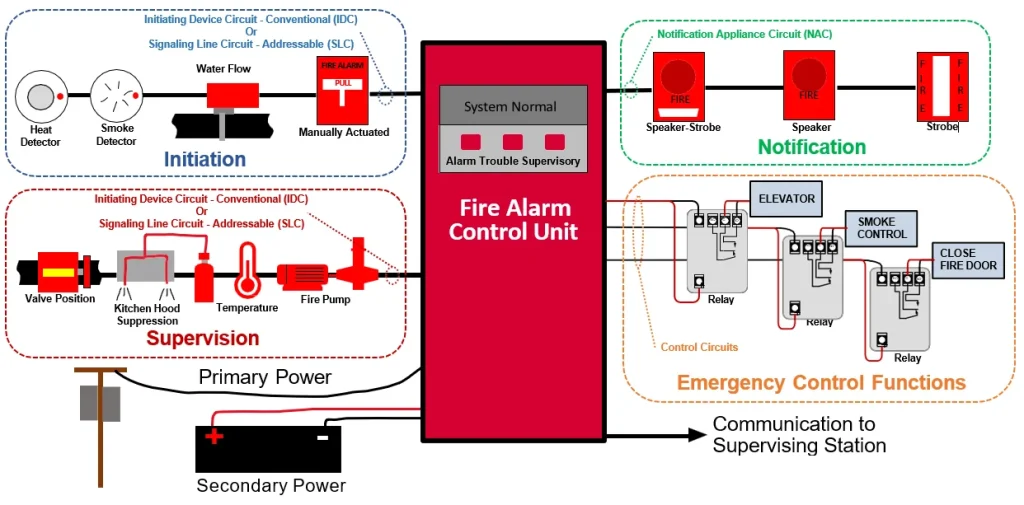
Fire alarm and detection systems. Inspection, testing and maintenance in accordance with NFPA72 shall be conducted on all fire alarm systems.
Fire extinguishers. Fire extinguishers shall be inspected, tested, and maintained in accordance with NFPA 10.
2.10Equipment.
2.10.1Establish a maintenance, cleaning and lubrication schedule for all equipment. The maintenance and cleaning schedule will vary with type of fiber processed and the equipment used. Lubricate equipment in accordance with manufacturer’s recommendations. Review plant fire incident records to determine whether cleaning or equipment maintenance was a factor, and increase frequency as needed.
2.11Electrical maintenance.
Testing of emergency lighting. Emergency lighting provided by battery backup shall be tested on a monthly basis.
Generators. Generators used for emergency or standby requirements of this Standard shall be inspected, tested, and maintained in accordance with NFPA 110.
Schedule 2
Structural Safety
1.1 Applicability of Building Code
1.1.1New factories shall comply with the more stringent requirements of this Standard and the Building Code of Pakistan (Seismic Provisions – 2007, Pakistan Building Code – 2021) plus code updates and jurisdictional circulars as they may be issued from time to time.
1.1.2Existing factory buildings are those that are in current use in the Pakistan garment and textile industry at the adoption of this Standard on 13 September 2023.
1.1.3For any substantial extension of an existing factory, the extended portions and the entire newly-configured factory structure shall comply with the requirements of Building Code of Pakistan (Seismic Provisions – 2007, Pakistan Building Code – 2021). Any other relevant laws and procedural regulations not mentioned in this Standard also applies.
Interpretive Guideline: Regardless of when a factory was constructed, the structural impact of any expansion on the entire structure must be analytically evaluated and confirmed by a qualified structural engineer.
1.1.4Additions to Existing Structures. When an existing building or structure is substantially extended or otherwise altered, all portions thereof affected by such cause shall be strengthened, if necessary, to comply with the safety and serviceability requirements provided in the Building Code of Pakistan (Seismic Provisions – 2007, Pakistan Buildling Code – 2021).
1.1.4.1 This Standard utilizes the Building Code of Pakistan (Seismic Provisions – 2007, Pakistan Building Code – 2021) (modified as noted herein) as the applicable standard for new factory construction and for all expansions or modifications to existing factories. When and if a replacement to the Building Code of Pakistan (Seismic Provisions – 2007, Pakistan Building Code – 2021) is issued by the applicable Code-developing body, it will be adopted as the applicable technical standard for new factories and all expansions or modifications to existing factories.
1.1.4.2 At the discretion of the CSO, a substantial expansion will be interpreted to mean any new floor or roof levels or horizontal floor additions or similar new structure.
1.2Structural Integrity of Existing Factory Buildings:
1.2.1Every existing factory building must demonstrate a minimum degree of structural integrity as confirmed by credible original structural documentation and a Preliminary Structural Assessment performed by a Pakistan Accord structural engineer, or QSEC.
Interpretive Guideline: The intent of Section 1.2 is that every existing factory must evidence a reasonable level of structural integrity regardless of when it was constructed and regardless of the availability of credible structural documentation. This Standard requires the analytical confirmation of structural capacity of key gravity and lateral loadbearing elements for the actual in situ conditions in the factory by a qualified structural engineer working on behalf of the Factory Owner. Taken in tandem with acceptable observed structural performance of the overall structure, the Preliminary Structural Assessment may be accepted as evidence of a reasonable level of structural integrity. For factory buildings with noted concerns or unacceptable findings from the Preliminary Structural Assessment, a higher level of structural investigation, analysis, and ongoing inspections may be required.
1.2.2Existing factory buildings and components thereof shall be assessed to confirm design adequacy to support all loads, including dead loads as they may occur and live loads as they may be imposed on the factory during its lifetime, without exceeding the allowable stresses or design strengths under applicable factored loads and load combinations for the materials of construction in the structural members and connections in accordance with the provisions of the Building Code of Pakistan (Seismic Provisions – 2007), except as specifically modified in this Standard.
Interpretive Guideline: Structures must have analytically determined or empiricallydetermined structural capacity to support all the imposed loads including occupants, equipment, water tanks, and storage loads without overstressing structural elements. Where the magnitude of dead loads and live loads can be determined with a high level of assurance, the applicable load factors and load combinations may be reduced as indicated in this Standard, subject to in-factory verification of the actual loads. The structural capacity of key elements must be confirmed and documented in accordance with accepted engineering design processes by qualified structural engineers.
NOTE: This Standard considers day-to-day loading conditions for assessment of existing garment and textile factory buildings considering life safety against building collapse. In this consideration, only service level wind loadings are considered for reinforced concrete buildings. However, assessments should note any key seismic characteristics of buildings in the report including irregularities, soft stories, and the like. For steel structures the Building Code of Pakistan (Seismic Provisions – 2007)- specified load factors are applicable.
1.2.3Structural integrity of existing factories may be confirmed by Preliminary Structural Assessment as described in Section 1.3. The Ultimate Strength design method for reinforced concrete elements and systems and the Load Factor design method for structural steel structures shall be the basis of retrofit design under this Standard.
1.2.4Serviceability. Structural framing systems and components shall be designed with adequate stiffness to avoid excessive cracking, deterioration, or unsafe conditions due to deflections, vibration, or any other serviceability shortcomings.
Interpretive Guideline: Deflections (sagging), rotations (twisting), perceivable vibrations, or other noticeable movements of the structure shall require additional structural investigation as required by this Standard. This intent of this Standard is to focus on Life Safety concerns rather than serviceability.
1.3 Preliminary Structural Assessment to Confirm Structural Integrity of Existing Factory Buildings
Interpretive Guideline. It is recognized that some Pakistani factory buildings were built before or absent active enforcement of Building Code requirements. Many of these factories lack basic documentation that could provide evidence of physical design characteristics such as element dimensions, reinforcing and material strengths which could be used to readily confirm the structural safety of the factories. Recognizing that absence of structural documentation does not make a factory unsafe, this protocol provides a methodology for Factory Owners who lack appropriate documentation to provide other acceptable evidence of structural integrity.
1.3.1This protocol is applicable for factories that, in the sole opinion of the Pakistan Accord
structural engineer, lack complete, original, accurate, and credible structural documentation as described in Building Code of Pakistan (Seismic Provisions – 2007)
1.3.2The Preliminary Structural Assessment for gravity and wind actions shall include the following activities:
1.3.2.1 Review of available documents, either original structural documents prepared in accordance with Building Code of Pakistan (Seismic Provisions – 2007) or as-built documents prepared in accordance with Section 1.2 of this Standard.
1.3.2.2 Comparison of these documents with actual as-built conditions, including dimensional checks of samples of structural elements.
1.3.2.3 Visual assessment of all structural elements for evidence of distress, cracking, or lack of performance.
1.3.2.4 Visual and analytical confirmation of floor loading in compliance with floor load plans.
1.3.2.4.1 Visual confirmation of performance of foundations, including absence of settlement cracking, excessive perimeter separations or settlement, or lack of floor levelness attributable to foundation settlements.
1.3.2.5 In assessing the load capacity adequacy of a pile foundation system under an existing
factory that has performed for at least five years without indications of excessive settling, the factor of safety shall be at least 1.5.
1.3.2.6 Visual confirmation of clear and redundant load path for lateral loads, including diaphragms and vertical elements. Visual observations shall note any evidence of apparent cracking or other lack of performance of lateral systems under prior lateral loading.
1.3.2.7 In-situ non-destructive testing including reinforcement scanning, rebound hammer tests and other similar non-destructive tests as deemed appropriate by the Structural Engineer at a number of sample locations.
1.3.2.8 Simple structural calculations to assess the basic capacity of structural members, including:
1.3.2.9 Columns and wall elements at most critical tiers, including lowest tier. Vertical elements shall be reviewed for maximum load combinations of forces due to axial and bending.
1.3.2.9.1.1 Unless confirmed otherwise by scanning or other investigations, columns may be assumed to be reinforced with a maximum of 1% steel times the gross plan area of the column. Other material data assumptions to be used in the calculations can be seen in Section 1.16.
1.3.2.9.2 Vulnerable or critical structural elements identified by the Pakistan Accord structural engineer including transfer girders, hangers, cantilevers, columns with high slenderness ratio, flat plate floors, and footings with inadequate thickness.
1.3.3The general purpose of the Preliminary Structural Assessment, and any follow-up detailed structural assessment is to answer the following seven questions in the affirmative:
Is the vertical load carrying system logical?
Is the lateral load-carrying system apparent and does it have redundancy?
Are key structural elements such as columns, slender columns, flat plates, and transfer structures satisfactory?
Is building performance in respect to foundation settlement satisfactory?
Is the structure free from any visible structural distress (progressive cracking) in main load-carrying members?
Is the structural strength and performance of any visible vertical or horizontal extensions acceptable?
Are credible structural documents available?
Either credible original structural document in accordance with Building Code of
Pakistan (Seismic Provisions – 2007) or
As-built documents in accordance with Section 1.20 will generally suffice.
1.4 Results of Preliminary Structural Assessment of Existing Factory Buildings
1.4.1If the Pakistan Accord structural engineer determines that the answers to the seven questions in Sections 1.3.3 are affirmative, the factory may be found to be acceptably structurally safe and compliant with this Standard without further structural investigations, at the discretion of the engineer.
1.4.2If the Pakistan Accord structural engineer determines that the answer to one or more of the seven questions in Sections 1.3.3 are negative, the engineer may recommend and/or conduct more detailed structural assessment, investigations or analysis.
1.4.3If a more detailed structural engineering assessment is not to be carried out, engineers are encouraged to conduct in-situ testing of material strengths coupled with outline calculations.
A
1.5 Detailed Structural Engineering Assessment of Existing Factory Buildings
1.5.1If the visual assessment or the Preliminary Structural Assessment indicates areas of structural concern, distressed structural members, or other lack of compliance with the requirements of this Standard, then more detailed structural investigation shall be required.
1.5.2Detailed engineering assessment shall be performed on any structural member identified as distressed. The cause and extent of structural distress shall be identified by assessment and expanded to include any other affected area of structure. To accomplish this, the Factory Owner shall engage a qualified Structural Engineering Consultant (QSEC) that meets the qualifications established by the Pakistan Accord and other relevant applicable regulations to provide structural advisory services to prepare all required design confirmation and structural documentation, as described in Section 1.31.
1.5.3If required, the QSEC shall prepare as-built structural documents as described in Section
1.20.
1.5.4 The QSEC shall ensure that there are accurate Factory Loading Plans available as described in Section 1.10.
1.5.5If required, the QSEC shall conduct and document detailed structural condition assessment in accordance with the requirements of ACI 437-19 and ACI 562-21, or similar accepted engineering practice. The strength of concrete shall be assessed by core test and may be supported by rebound hammer/UPV and amounts of reinforcement shall be assessed by ferro-scanning.
1.5.6If required, the QSEC shall conduct additional detailed structural condition assessments and investigations to determine the adequacy of specific structural elements, distressed structural members, or other conditions.
1.5.6.1 In the case that additional detailed structural assessments are required, the QSEC shall state assumptions regarding strength and properties of key construction materials. The QSEC shall determine the material properties using section 1.16.
1.5.6.2 Unless confirmed otherwise by scanning or other investigations, columns may be assumed to be reinforced with a maximum of 1% steel times the gross plan area of the column.
1.5.7The installation of advertising display framework structures, mobile phone antennae or similar dish structures, or towers atop any existing factory shall be critically examined against wind induced forces as specified by the Building Code of Pakistan (Seismic Provisions – 2007) using normal load factors. If a detailed structural assessment of the capacity of the structure to support such a tower indicates that the factory is adversely affected, then the tower shall be removed.
1.6 Remediation of Deficient or Overloaded Structural Elements
1.6.1If the Preliminary Structural Assessment or more detailed structural investigations determine that structural distress in a structural member is due to inadequate structural capacity under applied loads, the Factory Owner shall take appropriate steps to remediate the overload by implementing one of the following methods:
1.6.1.1 The applied loads may be reduced to acceptable levels if possible by removal and limitation of structure, equipment, utilities, or floor loading, or,
1.6.1.2 Overloaded structural elements may be strengthened using properly designed, documented, and installed strengthening and retrofit, fully in accordance with Building Code of Pakistan (Seismic Provisions – 2007).
1.6.2All retrofits are subject to technical review by Chief Safety Officer prior to implementation.
1.6.3All installation of retrofit shall be accomplished by specialty firms experienced in the materials and techniques of structural retrofit. See Section 1.30.
1.7Phased Construction. When a building or structure is planned or anticipated to undergo phased construction, structural members therein shall be investigated and designed for any additional stresses arising due to such effect.
Interpretive Guideline: Temporary or permanent loads due to construction phasing must be anticipated and analytically confirmed by a qualified structural engineer prior to any expansion.
1.8Restrictions on Loading. The Factory Owner shall ensure that the live load for which a floor or roof is or has been designed, will not be exceeded during its use.
1.9Factory Load Manager: The Factory Owner shall ensure that at least one individual, the Factory Load Manager who is located onsite full time at the factory, is trained in the structural capacity and operational load characteristics of the specific factory. The Factory Load Manager shall be responsible to ensure that the factory operational loads do not at any time exceed the factory floor loading limits as described on the Floor Loading Plans.
1.10Floor Loading Plans (Load Plans). In every factory building, Load Plans shall be prepared for each floor. These Load Plans shall document the actual maximum operational loading that is intended and/or allowable on each floor. Load Plans shall include the items described in Section 1.20.4.3. The Load Plan for each floor shall be permanently and conspicuously posted on that floor. Load Plans are subject to review and approval by Pakistan Accord engineers. Sample load plan is included in Figure 1.20.
1.11Floor Load Markings In areas of factory buildings used for storage of work materials and work products, walls, columns, and floors shall be clearly marked to indicate the acceptable loading limits as described in the Load Plan for that floor.
Interpretive Guideline: PakistanAccord inspections will confirm clear posting of floor live load plans and clear marking of storage areas. In recognition that load plans are not currently prepared or posted, initial Pakistan Accord inspections will be focused on helping the Factory Owner develop appropriate load plans based on the actual demonstrated floor capacity and operational utilization. The responsibility to produce and post load plans lies with the Factory Owner.
1.12 Load Factors and Load Combinations for Structural Analysis
1.12.1In analyzing the structural adequacy of existing factories, the load factors and load combinations described 5.12.2.1 of Building Code of Pakistan (Seismic Provisions – 2007) shall be used, noting that service level wind loads (i.e. unfactored) are applicable for concrete/ masonry structures and seismic loads are not considered as part of the existing factories under day to day loads.
1.13 Confirmation of Actual Dead Loads
1.13.1Dead loads shall be confirmed by measurement as follows:
1.13.2Slab thicknesses shall be measured at mid-span of representative slab spans on each floor.
1.13.3Dimensions of representative sampling of beams shall be field measured.
1.13.4Dimensions of representative sampling of columns shall be field measured.
1.13.5Construction materials of walls shall be confirmed by representative exploration.
1.13.6Fixed service equipment and other permanent machinery, such as generators, water tanks (full), production equipment, electrical feeders and other machinery, heating, ventilating and air-conditioning systems, lifts and escalators, plumbing stacks and risers etc. may be considered as dead load whenever such equipment is supported by structural members and weights are confirmed by manufacturer’s data sheets provided by Factory Owner for each piece of equipment.
1.14 Confirmation of Actual Operational Live Loads
1.14.1Operational live loads shall be confirmed by measurement as follows:
1.14.2For stored work materials, each type of material shall be weighed and measured.
1.14.3For stored work products, each size of boxed or packaged material shall be weighed and measured.
1.14.4For other types of live load, confirmation shall be accomplished in the most appropriate means in the judgment of the Pakistan Accord structural engineer.
1.14.5The live loads used for the structural design of floors, roof and the supporting members shall be the greatest applied loads arising from the intended use or occupancy of the building, or from the stacking of materials and the use of equipment and propping during construction but shall not be less than the minimum design live loads set out by the provisions of this section. For the design of new structural members for forces including live loads, requirements of the relevant sections of Building Code of Pakistan (Seismic Provisions – 2007) shall also be fulfilled.
1.15 Minimum Floor Design Loads
1.15.1Minimum floor design live loads for the review of factory sewing floors shall be 2.0kN/m2 (42psf).
1.15.2Where density of operations, storage of materials, or equipment weights require live load capacity in excess of 2.0kN/m2 (42psf), the Factory Owner shall engage a qualified structural engineer to analytically confirm that the structure achieves the needed load capacity.
1.15.2.1 If the approved design documents for the factory construction do not explicitly confirm that the required load capacity exists, then the floor load capacity in the affected areas shall be analytically confirmed and certified by a qualified structural engineer.
1.15.2.2 A certification letter with accompanying plans and calculations shall be prepared in accordance with Section 1.20 and made available at the factory site for review by third parties.
1.15.3For floors with design live load capacity of less than 2.0kN/m2 (42psf) (such as residential floors converted to factory use) the floor live load capacity shall be clearly indicated on the Floor Load Plans required by Section 1.20.
1.15.4For areas of factory floors with actual operational live loads in excess of 2.0 kN/m2, a certification letter with accompanying plans and calculations shall be prepared in accordance with Building Code of Pakistan (Seismic Provisions – 2007) or Section 1.20 and shall be made available at the factory site for review by third parties.
1.16 Confirmation of Actual Construction Material Properties
1.16.1Where practical, all preliminary and detailed structural assessments will preferably consider actual in-situ material strengths as measured by non-destructive and destructive testing in conformance with applicable ASTM testing protocols.
Key references:
Reinforced concrete:
ACI 214.4R-10 (Guide for Obtaining Cores and Interpreting Compressive Strength Results)
ASTM, “C42 Standard Test Method for Obtaining and Testing Drilled Cores and Sawed Beams of Concrete,” ASTM International, 2020.
ASTM, “C39/C39M-15a Standard Test Method for Compressive Strength of Cylindrical Concrete Specimens,” ASTM, 2021.
Reinforcement: test in accordance with ASTM A615/A615M-22
Structural steel: test in accordance with ASTM A370-22
1.16.2Where field conditions allow and are acceptable in the judgment of the Pakistan Accord structural engineer, presumed minimum material strengths and characteristics may be used as follows.
Where testing has not been used to confirm actual properties and there is no sign of structural distress or deficiency in the subject member, the following minimum properties may generally be used, unless good engineering judgment indicates lesser properties should be assumed:[4]
1.17.1Every building, structure or portions thereof shall be designed to resist lateral loads due to wind in compliance with the forces, Load Factors and Load Combinations as stated in Building Code of Pakistan (Seismic Provisions – 2007).
1.17.2When dead loads, live loads, and material properties are confirmed as described in Sections 1.13, 1.14, and 1.16, and there are no signs of distress due to loading, service level (i.e. unfactored) wind loads may be used as part of the assessment of existing concrete factory buildings.
1.17.3A redundant structural system with clear load path to foundations to resist lateral loads is required in all existing factories. If such a load path does not exist, or if the factory has been vertically expanded, the lateral-resisting capacity of the factory shall be analytically confirmed and strengthened as required to resist lateral loads.
1.17.4Any of the lateral loads prescribed in Building Code of Pakistan (Seismic Provisions – 2007), considered either alone or in combination with other forces, whichever produces the most critical effect, shall govern the design.
1.17.4.1 Confirmation of capacity of structures and components thereof to resist the effects of earthquake forces is not considered by this Standard.
1.17.5Importance Factor. Importance factor for all factory buildings and ancillary buildings shall be 1.0, unless hazardous materials are stored in the building. In that case, the importance factor shall be 1.5.
1.18 Seismic Bracing of Key Non-Structural Elements
1.18.1The following non-structural elements suspended from, attached to, or resting atop the structure shall be adequately anchored and braced to resist earthquake forces:
1.18.1.1 Gas pipes
1.18.1.2 Chemical or process pipes
1.18.1.3 Storage racks
1.18.1.4 Water tanks
1.18.1.5 Other suspended equipment weighing more than 1.8 kN that in the opinion of the Pakistan Accord structural engineer presents a danger to workers in an earthquake.
1.18.2 Seismic bracing for non-structural elements shall be designed using the requirements of Building Code of Pakistan (Seismic Provisions – 2007).
Interpretive Guideline: This requirement applies to both new and existing factories. It is intended to ensure that falling non-structural elements in a seismic event do not create life safety hazards or hindrances to building egress.
1.19 Required Structural Documentation for New and Existing Factories
1.19.1Every factory requires structural documentation that accurately describes the factory structure.
1.19.2Structural documentation shall be maintained at the factory site and made available to third parties assessing the structural safety of the factory.
1.19.3All structural documentation shall be prepared and signed by the structural engineer responsible for the preparation of the documents.
1.19.4New factories and any additions or expansions shall have complete structural documentation including Design Report and Structural Documents as described in Building Code of Pakistan (Seismic Provisions – 2007, Pakistan Buildling Code – 2021).
1.19.5Existing factories shall have one of the following types of documentation:
1.19.5.1 Complete and credible structural documentation prepared in general accordance with Building Code of Pakistan (Seismic Provisions – 2007) and used as a basis for the original construction of the factory building, or
1.19.5.2 As-built structural documents that accurately describe the structural elements as described in Section 1.20.
Interpretive Guideline: It is recognized that few factory buildings have complete structural documentation. It is not intended that the Factory Owner produce complete structural documents after construction is complete. In this case, as-built documents will be required from field investigations as outlined in Section 1.20.
1.20 Requirements for As-Built Documents
1.20.1For existing factories that lack complete and credible documentation, credible as-built documentation shall suffice. As-built documents shall be prepared in accordance with this Section.
1.20.2The Factory Owner shall engage a qualified structural engineer (QSEC) to prepare accurate as-built documents from firsthand knowledge and personal investigation of the actual in situ factory construction and operational conditions.
1.20.3The credibility of structural documentation shall be determined by the Chief Safety Officer on the basis of observations and tests at the factory.
1.20.4As-built documents shall serve as the basis for any detailed structural analysis performed to confirm the capacity of structural elements and load plans.
1.20.5As-built documents shall include, at a minimum, the following:
1.20.5.1 Scaled and dimensioned Architectural Documents, including:
1.20.5.1.1 Scaled site plan showing:
general layout of all buildings in the complex with labels
location and names of adjacent streets
location and size of utilities, if known
1.20.5.1.2 Scaled architectural floor plan for each level of each building showing:
location and size of stairs
location and size of elevators
location of fixed walls
location of corridors
labeled usage areas on each floor, e.g., sewing, storage, dining, rooftop, office, etc.
Location of major machinery and equipment
General layout of factory activities
1.20.5.1.3 Scaled elevations of each façade of the building showing:
general configuration of the building
location and type of façade materials
accurate number of levels and any intended future vertical or horizontal expansion areas measured locations of columns and walls
1.20.5.2 Scaled and dimensioned Structural Documents as follows:
1.20.5.2.1 Floor Plan for each level showing:
measured locations of columns and walls
reinforcement details (rebar size and layout) for any columns determined using any scanning device or physical investigations. Columns at lowest tiers and rooftop are most useful to explore.
confirmed construction type of walls, e.g., masonry or cast concrete
general size and layout of beams
thickness of slabs
general size and location of major floor openings
1.20.5.2.2 Foundation Plan showing general layout and type of foundations, if known
1.20.5.2.3 Roof Plan showing any construction, equipment, water tanks, or tower added atop roof level.
1.20.5.2.4 Building section(s) showing all constructed floors, dimensions between floors, and intended future vertical or horizontal expansion, if any.
1.20.5.2.4.1 Building sections shall indicate location and extent of any mezzanines, suspended storage areas, or partial floors.
1.20.5.3 Factory Layout and Load Documents for every floor showing:
scaled layout of work stations
operating equipment
dedicated aisle locations
type and extent of storage areas
type and weights of stored work materials and/or stored work products at maximum density
Factory layout and loading documents may use the structural plan documents as background.
Factory Layout and Load Plans shall be coordinated with the structural plans.
1.20.5.4 Example of factory layout and loading documents is included in Figure 1.20.
Figure 1.20: Sample load plan
1.20.5.5 Factory Equipment Schedule, including:
Type of each piece of factory equipment including generators, washing machines, driers, etc.
Include plan dimensions and weight of each piece of equipment.
1.21 Required Statement of Design Responsibility
1.21.1The Factory Owner’s engaged consultant (QSEC) shall provide written evidence of design responsibility, including calculations, design report, and documents as appropriate, for each of the following situations:
1.21.1.1 Structural expansions or modifications to existing factories.
1.21.1.2 Structural investigations or design confirmations of structural distress or suspected deficiencies.
1.21.1.3 Structural strengthening or improvements to comply with Code requirements Structural repairs of existing structural elements.
1.22 Construction Observation
1.22.1Construction observation of all new construction, including new factory buildings, expansions of existing factory buildings, and repairs of existing factory buildings, shall be performed by the QSEC.
1.22.2Construction observation shall include, but not be limited to, the following:
1.22.2.1 Specification of an appropriate testing and inspection schedule prepared and signed with date by the responsible person;
1.22.2.2 Review of testing and inspection reports;
1.22.2.3 Regular site visits to verify the general compliance of the construction work with the structural drawings and specifications, and
1.22.2.4 Preparation of reports to document the results of observations and testing, including resolution of non-conforming construction.
1.22.3The quality and completeness of new construction, expansions, alterations, and repairs must be confirmed by independent observation and testing during construction.
1.23Notification to Accord of Planned Modifications to Factories. Prior to the implementation of any substantial structural expansion, alteration, or repair of an existing factory utilized by Accord companies, the Factory Owner shall notify the Chief Safety Officer of his intent.
1.24Temporary Construction Loads on Existing Factories. All loads required to be sustained by an existing factory structure or any portion thereof due to placing or storage of construction materials and erection equipment including those due to operation of such equipment shall be considered as erection loads.
1.24.1 Provisions shall be made in design to account for all stresses due to such loads.
1.24.2When an existing factory will be expanded, all erection loads, and other construction loads shall be analytically confirmed and documented by an approved structural engineer.
Interpretive Guideline: Temporary construction loadings on an existing factory during an expansion or other construction operations must not be allowed to endanger the life safety of building occupants through overloading elements of the factory. Construction loadings must be properly reviewed and managed.
1.25 Site Investigation
1.25.1Application for construction of a new building or structure, and for the alteration of permanent structures which require changes in foundation loads and their distribution shall be accompanied by a statement describing the soil in the ultimate bearing strata, including sufficient records and data to establish its character, nature and load bearing capacity. Such records shall be certified by an approved structural engineer in accordance with Section 1.21.
1.25.2Prior to vertical expansion of an existing factory, an approved structural engineer (QSEC) shall provide analytical confirmation and documentation that the foundations supporting the factory have adequate capacity to safety support the additional loads due to the expansion.
1.26 Durability and Maintenance
1.26.1Factory Owner shall attend to all areas of needed maintenance, including areas with efflorescence, dampness, and corrosion.
1.26.1.1 Standing water on rooftop or other locations shall not be permitted.
1.26.1.2 Roofs shall be sloped to drain with minimum drainage of 1%.
1.26.1.3 Drains shall be provided at low points.
1.26.1.4 All exposed reinforcement (kept for possible future expansion) shall be protected from weathering effect and rust by using approved protective covering.
1.27 Qualifications of Testing Laboratory
1.27.1Where testing of in situ structural elements or materials or construction materials is required to confirm strength or other characteristics, this testing shall be performed in accordance with applicable ASTM specifications by a qualified testing laboratory that meets the requirements of Section 1.27.
1.27.2 The Testing Laboratory shall meet the basic requirements of ASTM E 329 and shall provide to the Pakistan Accord evidence of current accreditation from the American Association for Laboratory Accreditation, the AASHTO Accreditation Program, the “NIST” National Voluntary Laboratory Accreditation Program, or an equivalent Pakistan certification program.
1.27.3The Testing Laboratory shall be approved by the Pakistan National Accreditation Council or other relevant certification body to perform Special Inspections and other tests and inspections as outlined in the applicable building code.
1.27.4Tests and inspections shall be conducted in accordance with specified requirements, and if not specified, in accordance with the applicable standards of the American Society for Testing and Materials or other recognized and accepted authorities in the field.
1.28 Qualifications of Welding Inspectors
1.28.1Inspectors performing visual weld inspection shall meet the requirements of AWS D1.1 Section 6.1.4. Inspectors shall have current certification as required by Pakistani law and Building Code of Pakistan (Seismic Provisions – 2007).
1.28.2Inspectors performing non-destructive examinations of welds other than visual inspection (MT, PT, UT, and RT) shall meet the requirements of AWS D1.1, Section 6.14.6.
1.29 Retrofitting of Deficient Structural Elements
1.29.1When a structural member is identified to have inadequate structural capacity and the applied loadings cannot or will not be reduced to allow the structural member to be acceptable, then structural retrofitting may be accomplished in accordance with this section.
1.29.2Structural retrofitting shall be properly design using industry-standard methods.
1.29.3Retrofitted elements must be strengthened to provide adequacy under all imposed and anticipated loads using the load factors specified in 5.12.2.1 of Building Code of Pakistan (Seismic Provisions – 2007).
1.29.4Beam and slab cracks may be repaired by epoxy injection using techniques prescribed in ASTM.
1.29.5Beam and slab strengths may be supplemented by using properly designed and installed Ferro cement, micro-concrete, or FRP solutions.
1.29.6Standard retrofit techniques such as concrete jacketing, micro-concrete encasement, FRP-wrapping, etc. may be used for strengthening of columns.
1.29.7Where columns are strengthened the load path through floors and joints must be carefully accommodated.
1.29.8Column slenderness may be reduced by installing properly designed lateral bracing systems.
1.29.9 All retrofitting shall be overseen by the responsible QSEC.
1.30 Qualifications of Retrofitting Installation Firms
1.30.1All firms used for installation of structural retrofitting elements shall be specialty construction firms with a minimum of five (5) years of experience in this area.
1.31 Qualification of QSEC
1.31.1Subject to approval by the Accord, the minimum qualification and experience of the QSEC to be engaged by the factory owner to undertake further detail assessment or design of remediation work shall be as follows:
Shall be graduate in civil engineering from a recognized university.
Shall have minimum 10 years of structural design experience.
Shall have professional license to undertake structural design of building structure in Pakistan i.e., a membership of the Pakistan Engineering Council, license from the Sindh Building Controller’s Authority and/or relevant authorities in the Province of Punjab is required.
The engineering firm involved must have at least ten years of experience in structural analysis and retrofitting of existing structures.
[3] In accordance with the Punjab Community Safety Act 2021 (available at: http://punjablaws.gov.pk/laws/2817.html) and
Building Safety Regulations 2022 for existing industrial buildings (available at: https://rescue.gov.pk/BuildingRegulations.pdf).
[4] This data is based on concrete strength in Bangladesh. This data is therefore subject to revision when more reliable data can be collected in Pakistan.
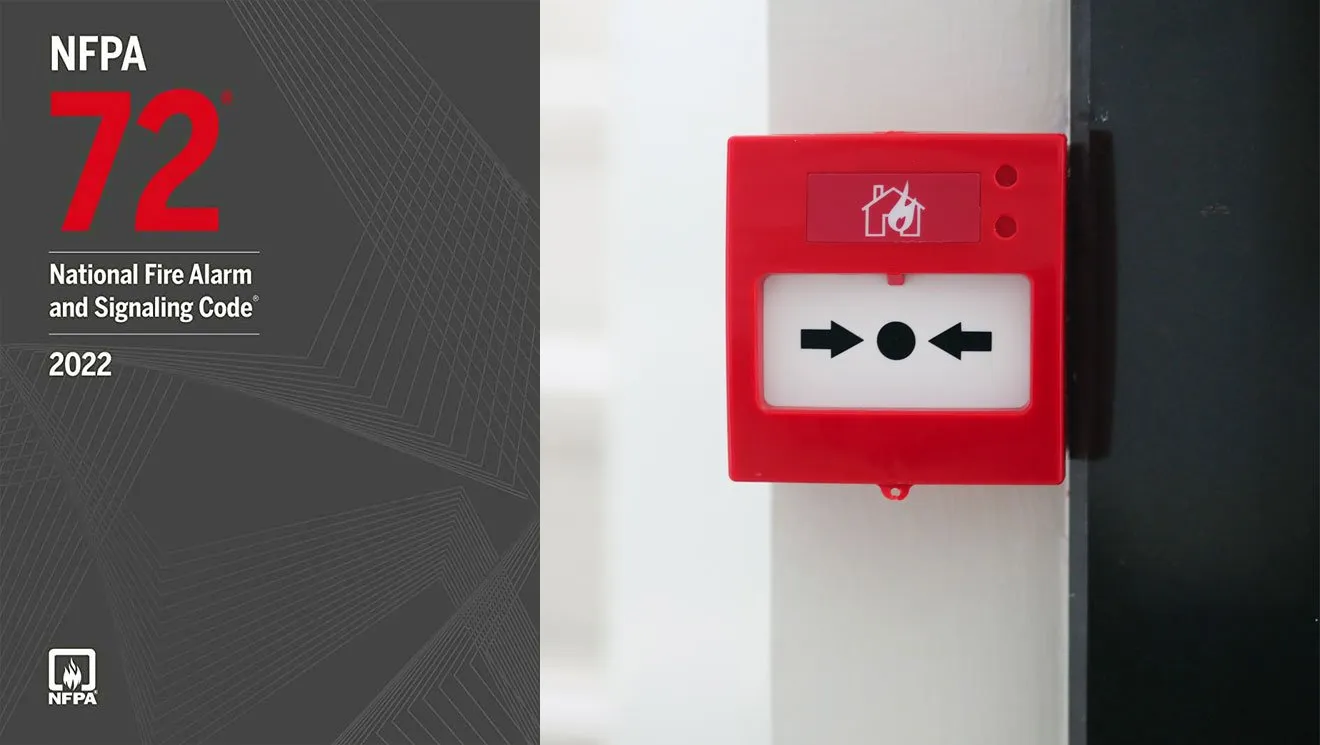
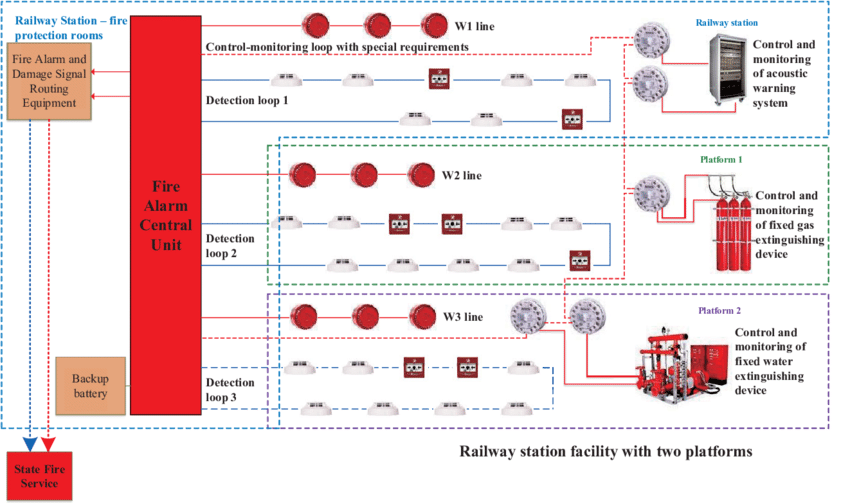
Modern buildings are complex, populated, and technology driven. Protecting lives and property requires more than extinguishers or sprinklers — it demands early detection and reliable notification systems. The NFPA 72 – National Fire Alarm and Signaling Code provides the international benchmark for design, installation, and maintenance of these systems.
In Pakistan, the Building Code of Pakistan – Fire Safety Provisions 2016 legally mandates that all significant occupancies follow fire alarm and detection requirements consistent with NFPA standards.
This comprehensive post explains both standards, walks through real design logic, and highlights practical examples for professionals. It also introduces Excel Industrial Services (EIS) — one of Pakistan’s most reputable suppliers and integrators of NFPA-compliant fire alarm systems.
Understanding NFPA 72 — The Global Fire Alarm Standard
1. Origin and Development
NFPA 72 evolved from early 20th-century signaling standards.
1898: Committee on Thermo-Electric Fire Alarms formed.
1993: Multiple standards merged into one comprehensive code.
2010: Emergency Communication Systems (ECS) added.
2022: Cybersecurity, remote access, and visual tagging introduced.
2. Code Purpose
NFPA 72 defines how fire alarm and communication systems must be designed, installed, tested, and maintained once required by a building or fire code. It guarantees consistent reliability and interoperability.
3. Structure Overview
Category
Content
Admin Chapters (1–9)
Scope, definitions, responsibilities
Support Chapters (10–12)
Fundamentals, wiring, power supplies
System Chapters (17–29)
Devices, notification, communication, monitoring
Annexes (A–I)
Explanatory notes and best practices
Fire Alarm Requirements from the Building Code of Pakistan (Fire Safety Provisions 2016)
The Pakistan Engineering Council’s 2016 code adapts global NFPA standards to local conditions.
Key Enforcement Points
Every new building, renovation, or change of occupancy must meet fire safety provisions (Clause 3.1).
Approval and inspection authority: local Building Control Authority, Civil Defense, or Cantonment Board (Clause 1.4).
Violations constitute breaches of engineering practice (Clause 1.2).
Chapter 9 — Detection, Alarm & Communication Systems
Highlights from Section 9.7:
Educational Occupancies (9.7.2.3): Smoke detectors in all corridors and rooms; CO detectors near fuel appliances.
Day-Care (9.7.2.5): Automatic and manual systems; detectors in playrooms, corridors, and sleeping areas.
Health Care (9.7.2.7): Corridor and patient-room detection, staff-station pull points.
Detention (9.7.2.9): Detection in cells, common, and sleeping areas.
Residential (9.7.2.11–12): Smoke alarms in every bedroom, corridor, and level; interconnection required for new dwellings.
Business (9.7.2.23–24): Fire alarm mandatory for 3-plus-story or high-occupant buildings.
High-Rise (9.7.2.27): Voice Evacuation System + Automatic Detection required.
Integration with NFPA 72
The Building Code explicitly references NFPA 1 (2015) and NFPA 72 (2013 / 2016 editions) as technical bases for design and performance.
Core Design Concepts under NFPA 72
1. System Fundamentals
Primary Power: Normal utility source.
Secondary Power: Battery + charger or generator ensuring ≥ 24 h standby + 5 min alarm (Sec. 10.6.7.2.1).
Circuit Supervision: All initiating and notification pathways must detect opens, shorts, or grounds within 200 s.
Pathway Survivability:
Level 0 – no protection
Level 2 – 1-hour fire-rated
Level 4 – 2-hour fire-rated; used for high-rise voice systems.
2. Initiating Devices (Ch. 17)
Smoke Detectors: 9.1 m (30 ft) spacing on smooth ceilings (Sec. 17.7.3.2.3).
Heat Detectors: 15.2 m (50 ft) max spacing (Sec. 17.6.3.3.1).
Manual Call Points: Within 1.5 m of exit doors, ≤ 60 m travel distance.
CO Detectors: Required near sleeping areas or fuel-burning sources.
Example Layout: For a 900 m² open-plan office (height 3 m), detectors every 9 m × 9 m → 12 units total; pull stations at both stair exits.
3. Notification Appliances (Ch. 18)
Sound: ≥ 15 dB above average ambient or ≥ 5 dB above maximum.
Remote Diagnostics: Allows off-site troubleshooting under secure protocols.
Visual Inspection Tagging (Annex I): Color-coded tags (Green/Yellow/Red) for system status.
Digital Monitoring: Cloud-based supervising stations for multiple buildings.
These innovations are expected to influence future updates of the Pakistan Building Code.
Local Context & Implementation Challenges
Awareness Gap: Many installations use non-listed equipment without UL/EN certification.
Coordination Issues: Design drawings not shared with mechanical and electrical teams.
Maintenance Neglect: Batteries and detectors often un-serviced for years.
Regulatory Oversight: AHJ capacity varies by province.
Solution: Capacity-building by NFPAP and professional training on NFPA 72 implementation.
THIS POST SPONSERED By! Excel Industrial Services (EIS): Supporting Code-Compliant Fire Safety
Excel Industrial Services provides complete solutions for NFPA 72 and BCP-compliant fire alarm systems, including:
System Design & Engineering per NFPA 72 and BCP 2016.
Supply of UL/FM-listed fire alarm panels and devices.
Installation and commissioning with certified engineers.
Annual inspection and maintenance contracts.
Integration with sprinkler, voice, and BMS systems.
Powered By EmbedPress
Example Projects: Commercial complexes in Karachi & Lahore, educational institutions in Islamabad, and industrial sites across across Pakistan.
Key Strengths:
CFPS-certified personnel.
Compliance with NFPA 72 (Ch. 10–24).
Reports signed & stamped for AHJ approval.
Conclusion
Implementing NFPA 72 alongside the Building Code of Pakistan 2016 (Fire Safety Provisions) ensures life safety, property protection, and international-grade reliability in Pakistani buildings.
Architects, engineers, and facility owners must collaborate with qualified experts to design, install, and maintain compliant systems.
Excel Industrial Services (EIS) remains one of the top and most trusted sources in Pakistan for arranging and implementing fire alarm systems that fully comply with NFPA 72 standards and the Building Codes of Pakistan.
Detailed Comparison: NAFFCO Fire Pumps vs SIBCA Fire Pumps
Factor
NAFFCO in Pakistan
SIBCA in Pakistan
Official Presence in Pakistan
NAFFCO does not have any exclusive office or representative in Pakistan. They work through a large network of distributors and sub-dealers. This creates confusion for end users about who is the official and authorized representative of NAFFCO.
SIBCA has an exclusive branch office and direct representation in Pakistan, ensuring clients deal directly with the company. End users are guaranteed clarity, transparency, and official support without third-party confusion.
Customer Support & After-Sales Services
NAFFCO mainly focuses on sales volume through distributors. After-sales support is usually delegated to these distributors, many of whom lack proper training and commitment. As a result, Pakistani customers often face delays, poor service, or no service at all.
SIBCA provides direct after-sales support in Pakistan with its own technical team. This includes maintenance, commissioning, warranty claims, troubleshooting, and training — all handled directly by SIBCA without middlemen.
Counterfeit & Fake Products Issue in Pakistan
Due to NAFFCO’s absence of direct presence and weak monitoring, the Pakistani market is flooded with counterfeit NAFFCO fire equipment and systems. More than 60% of NAFFCO products in Pakistan are locally copied with fake nameplates and tags, leading to serious safety risks.
SIBCA has implemented strict control mechanisms in Pakistan. Every SIBCA supply is verified and delivered directly through SIBCA Pakistan. Moreover, SIBCA has registered its products with Pakistan Copyrights Authority, ensuring full brand protection and zero counterfeit risk.
Pricing Transparency
NAFFCO products in Pakistan are sold mostly via distributors who add 25-40% profit margins on top of factory prices. If cheaper NAFFCO products are offered, they are usually fake or low-quality copies.
SIBCA provides direct factory pricing in Pakistan, cutting out distributor margins. Clients get genuine, certified, and original fire equipment directly at competitive prices, making SIBCA more cost-effective.
Range of Fire Fighting Equipment & Systems
NAFFCO offers a wide product range, but customers in Pakistan often struggle to identify original vs counterfeit NAFFCO products. Their fire alarms, fire pumps, sprinklers, extinguishers, and suppression systems are widely copied in the local market.
SIBCA offers a complete range of certified fire safety systems in Pakistan, including fire alarm systems, sprinklers, extinguishers, hydrants, fire suppression systems, and pumps. Every product supplied by SIBCA Pakistan is 100% authentic, verified, and backed by local warranty.
Project Execution in Pakistan
NAFFCO relies on sub-contractors and distributors for projects in Pakistan. Quality varies significantly depending on the distributor, often leading to installation issues and non-compliance with NFPA & international standards.
SIBCA manages projects directly in Pakistan with in-house teams, ensuring strict compliance with NFPA, UL, FM, and Civil Defence-approved standards. End users get assurance of safety, quality, and compliance.
Trust & Brand Reputation in Pakistan
Due to counterfeit issues, unclear distributor policies, and weak after-sales services, NAFFCO’s trust level among Pakistani end-users has dropped. Many customers report difficulty verifying originality of NAFFCO products.
SIBCA’s direct presence and market monitoring in Pakistan has built strong trust and brand reputation. Clients prefer SIBCA because they get genuine products, direct support, verified warranties, and guaranteed originality.
Verification of Original Products
No official verification mechanism in Pakistan. End users must rely on distributors’ word, which is often misleading.
Every SIBCA product in Pakistan can be directly verified with SIBCA Pakistan office, ensuring 100% authenticity and peace of mind.
NAFFCO vs SIBCA – Which Fire Fighting Equipment & Systems Are Better in Pakistan?
In Pakistan’s growing construction and industrial sector, fire fighting equipment and systems play a critical role in ensuring safety and compliance with NFPA and international standards. Two names that often come up in this sector are NAFFCO and SIBCA. Both are known for providing fire pumps, fire alarm systems, fire extinguishers, sprinklers, emergency lighting, and complete fire protection systems.
At first glance, NAFFCO appears to be a well-established international brand. But when we look closely at the real situation in Pakistan, SIBCA emerges as a far better and more reliable choice for consultants, contractors, and end users.
1. Direct Presence in Pakistan
One of the biggest challenges with NAFFCO in Pakistan is the absence of any exclusive office or official representation. NAFFCO products are sold through multiple distributors, which leads to confusion among clients about who the official contact is. This lack of direct accountability causes delays and miscommunication.
In comparison, SIBCA has established its own exclusive branch office and direct representation in Pakistan. Clients and consultants can easily approach SIBCA without dealing with third-party distributors. This creates trust, clarity, and stronger accountability in every project.
👉 Advantage: SIBCA provides direct, official support inside Pakistan. NAFFCO does not.
2. Sales vs Service Approach
NAFFCO operates mainly as a sales-driven company in Pakistan. Their focus is on selling equipment through distributors, not on supporting the end users. As a result, after-sales services are weak and inconsistent, depending on distributor capabilities.
On the other hand, SIBCA works with its own local team in Pakistan, offering end-to-end services. From equipment supply to installation, commissioning, training, and maintenance, SIBCA takes responsibility for the complete fire fighting system.
👉 Advantage: SIBCA ensures long-term service, NAFFCO leaves service to distributors.
3. Counterfeit Problem with NAFFCO in Pakistan
Perhaps the biggest problem with NAFFCO in Pakistan is the widespread counterfeit issue. Over the years, as NAFFCO products became popular, many local companies started manufacturing fake fire pumps, extinguishers, and alarms with fake NAFFCO nameplates and models.
It is estimated that over 60% of NAFFCO-branded products in the Pakistan market are counterfeit. Since NAFFCO has no official office or monitoring system in Pakistan, they have failed to stop this problem. End users often end up purchasing unsafe and low-quality products, believing them to be genuine NAFFCO.
SIBCA has solved this problem with strict controls. Every SIBCA product in Pakistan is supplied directly by SIBCA Pakistan after project verification. Additionally, SIBCA products are legally registered with the Pakistan Copyrights Authority, protecting the brand against counterfeiting.
👉 Advantage: SIBCA ensures 100% authenticity, while NAFFCO cannot protect its brand in Pakistan.
4. Pricing and Transparency
With NAFFCO, pricing in Pakistan is always uncertain. Products are sold via distributors who add 25–40% margins to the original factory price. Some companies even offer NAFFCO products at extremely low rates, which is often a sign that the equipment is fake or locally copied.
SIBCA avoids this confusion by offering direct factory prices to customers in Pakistan. Since there are no middlemen, prices are fair, transparent, and directly backed by the manufacturer. Clients know they are getting both value and authenticity.
👉 Advantage: SIBCA offers transparent factory-direct prices, NAFFCO pricing is inflated or suspicious.
5. Warranty and After-Sales Support
Warranty claims for NAFFCO products in Pakistan are handled by distributors, not the manufacturer. This creates delays, disputes, and in many cases, warranty rejections. NAFFCO itself is not directly involved, leaving end users frustrated.
In contrast, SIBCA manages warranties directly through its Pakistan office. Any warranty claim or service issue is resolved by SIBCA’s official team, ensuring accountability and fast response. Beyond warranties, SIBCA also provides maintenance, inspections, and technical support – something NAFFCO does not offer locally.
👉 Advantage: SIBCA guarantees warranty and after-sales support, NAFFCO does not.
6. Project-Level Technical Support
Fire fighting systems are not just about buying equipment – they require proper design, integration, and compliance with NFPA and local codes.
NAFFCO in Pakistan does not provide direct project-level support. Distributors only sell the equipment, leaving consultants and contractors to handle technical integration. This often leads to compliance issues or system inefficiencies.
SIBCA, however, partners directly with consultants and contractors. Their Pakistan team provides design review, project verification, and system integration support. This ensures every system supplied by SIBCA is compliant, efficient, and reliable.
👉 Advantage: SIBCA supports projects from start to finish, NAFFCO only sells equipment.
7. Reputation and Trust in Pakistan
NAFFCO’s brand reputation in Pakistan has been badly affected by the counterfeit problem and the lack of direct support. Many consultants and clients hesitate to specify NAFFCO products because they cannot be sure of authenticity.
SIBCA, on the other hand, has quickly built a reputation for reliability and trust. Thanks to its direct presence, strict brand protection, and customer-first approach, SIBCA is seen as a safe and dependable choice by contractors, consultants, and end users across Pakistan.
👉 Advantage: SIBCA is trusted in Pakistan, NAFFCO faces doubts and brand damage.
Final Verdict – Why SIBCA is the Better Choice for Pakistan
While NAFFCO may be internationally known, in Pakistan it suffers from serious flaws:
No direct office or representation
Over 60% counterfeit products in the market
Inflated distributor pricing
Weak warranty and after-sales services
Lack of project-level technical support
SIBCA Fire Fighting Equipment & Systems offers a clear advantage by providing:
Exclusive Pakistan office & representation
100% authentic products, copyright registered in Pakistan
Transparent factory-direct pricing
Direct warranty and after-sales support
Full technical and project support
Strong market reputation & customer trust
👉 For fire safety projects in Pakistan – whether industrial, commercial, or residential – the smarter choice is clear: SIBCA Fire Fighting Equipment & Systems.
If you are MEP/HVAC/Fire Design Consulting Firm so great opportunity to elevate your firm’s expertise in fire safety compliance with our complimentary NFPA Codes Training Sessions Series, designed to align with Pakistan’s Building Codes and international NFPA codes of fire and safety. Register now to empower your engineers belongs to design of fire and safety systems projects with cutting-edge knowledge!
Download Registration Form
Powered By EmbedPress
🔥 Why Attend?
Master NFPA Codes: Each session dives deep into a specific NFPA code critical for fire system designs.
Boost Project Compliance: Ensure your designs meet Pakistan’s Fire & Safety regulations referring to NFPA Codes and global best practices.
Exclusive Access: Tailored only for Pakistani design consultancy firms. Nominate your fire-safety engineers to gain actionable insights.
Free of Cost: Fully funded by supporting brands of world’s best fire and safety equipment products
🎯 Who Should Participate?
Eligible Firms:
MEP/HVAC/Fire design consultancy providing firms operating in Pakistan. Nominees: Engineers responsible for fire/safety system design. Each firm may nominate multiple engineers (max 3 engineers)
“Equip your team with NFPA proficiency to design safer buildings, reduce project risks, and elevate your firm’s credibility in Pakistan’s construction sector.”
Act Now! 🔗 Download fill and submit the Registration Form →re**********@*****ak.org 📞 Questions? WhatsApp/Call: +92 344 3230 843 🌐 Stay Updated:www.nfpapak.org
Don’t miss this transformative opportunity—secure your firm’s spot today!
Organized by NFPA Pakistan Empowering Design Excellence in Fire & Safety
In Pakistan’s rapidly growing urban landscape, high-rise buildings demand uncompromising fire safety. Fire suppression systems, particularly automatic sprinklers combined with robust standpipe systems, are the frontline defense against catastrophic fire events. These systems work in tandem: sprinklers automatically control or extinguish fires at the source, preventing spread, while standpipe systems provide crucial water outlets for firefighters to connect hoses on upper floors, ensuring they can combat flames effectively where hydrants are inaccessible. Their importance in protecting lives, property, and business continuity cannot be overstated.
Meeting the Pakistan Accord Mandate: Height & Design Criteria
As mandated by the Pakistan Accord Building Standard, any building exceeding 15 meters in height (measured from fire department vehicle access to the highest occupied floor) must install a fire sprinkler system. Crucially, this system must be designed and installed strictly in accordance with NFPA 13: Standard for the Installation of Sprinkler Systems. Deficiencies, such as the complete absence of sprinklers in specific buildings (as observed on sites like Building 2 & 3), represent severe non-compliance and pose immense risk, triggering strict remediation timelines.
Designing for Safety: The Pillars of NFPA Compliance
Designing an effective fire suppression system requires meticulous adherence to a suite of NFPA standards beyond just NFPA 13. Each code addresses critical components:
NFPA 13 (Sprinkler Systems): Dictates sprinkler layout, spacing, pipe sizing, water supply requirements, and hydraulic calculations. It ensures adequate coverage and water delivery to suppress fires based on occupancy hazards.
NFPA 14 (Standpipe and Hose Systems): Governs the design, installation, and testing of standpipes – the vertical piping delivering water for firefighter hose connections. It specifies types (Class I, II, III), pressure requirements, hose valve locations, and the vital integration with the sprinkler supply. Standpipes are essential for firefighter operations in multi-story buildings.
NFPA 20 (Fire Pumps): Covers the selection and installation of fire pumps that boost water pressure when the public supply is insufficient to meet the demands of both sprinklers and standpipes simultaneously.
NFPA 22 (Water Tanks for Private Fire Protection): Sets standards for constructing and maintaining on-site water storage tanks (gravity or suction) that serve as a dedicated fire protection water supply.
NFPA 24 (Private Fire Service Mains): Regulates the underground piping (fire mains) connecting the water source (public supply or tank) to the building’s fire protection systems, including sprinklers and standpipes.
The Standpipe Imperative:
Standpipes are not an optional add-on; they are a fundamental part of a high-rise building’s fire defense strategy. NFPA 14 ensures they provide reliable, readily accessible water at adequate pressures for firefighting crews on upper floors, directly supporting the sprinkler system’s operation during extended incidents.
Achieving Accord Compliance: The Critical Path & Common Pitfalls
The Accord mandates a structured remediation process for non-compliant systems, typically involving:
Design Submission (Within 6 Weeks): Submit comprehensive design documentation (drawings, technical datasheets, product certifications) demonstrating full compliance with NFPA 13, 14, 20, 22, and 24 to Pakistan Accord for review before purchasing equipment.
Financial Commitment (Within 6 Weeks): Provide proof (e.g., Letter of Credit) for importing specialized SUPS components.
Material Verification (Within 6 Months): Submit documentation proving all materials (imported and local) are purchased and on-site.
As-Built Submission & Inspection (Post-Installation): Submit final “as-built” documentation after installation, notify the Accord of completion, and undergo their verification inspection against the approved design.
Why Choose National Fire Protection Associates of Pakistan (NFPAP) for Your Accord Fire Safety?
Navigating the complexities of NFPA standards and Pakistan Accord requirements demands unparalleled skill. NFPAP (www.nfpapak.org) is your trusted partner for designing, supplying, and commissioning fully compliant fire suppression systems:
Unmatched NFPA Expertise: Our team includes NFPA USA Certified Fire Protection Specialists (CFPS), possessing deep, certified knowledge of NFPA 13, 14, 20, 22, 24, and related codes.
Guaranteed Compliance: We utilize industry-licensed hydraulic calculation software (essential for NFPA 13 & 14 compliance) to perform precise pressure and flow modeling. This ensures your sprinkler and standpipe system design meets all NFPA and Pakistan Accord standards before installation, avoiding costly rework and rejection.
End-to-End Solutions:NFPAP Pakistan, in joint venture with leading international brands, offers the complete range of fire suppression and sprinkler system equipment: Sprinkler heads (various types & K-factors), pipes & fittings, valves (alarm, check, control), fire pumps, water storage tanks, standpipes, hose cabinets, pressure gauges, flow switches, and system monitoring panels.
Seamless Execution: We provide comprehensive services, including:
NFPA-compliant system design and documentation for Accord submission.
Supply of all certified equipment and accessories.
Supervision of installation by qualified technicians.
Commissioning and testing to ensure full functionality.
Preparation and submission of “as-built” documentation.
Support during the Pakistan Accord verification inspection.
Accord-Focused Approach: We understand the specific documentation, review process, and compliance benchmarks required by the Pakistan Accord, ensuring a smooth path to approval.
Don’t Compromise on Fire Safety Compliance!
Missing sprinklers, inadequate standpipes, or non-compliant designs are not just violations; they are life-threatening risks. Ensure your buildings meet the stringent Pakistan Accord Building Standard and provide the highest level of fire protection.
For a FREE consultation on designing, supplying, and installing NFPA-compliant fire suppression sprinkler and standpipe systems for Accord approval, contact NFPAP Pakistan today!
National Fire Protection Associates of Pakistan (NFPAP) 🌐 Web: www.nfpapak.org ✉️ Email: gu***@*****ak.org 📞 Tel/WhatsApp: +92 344 3230843
Protect Lives, Protect Assets, Ensure Accord Compliance with NFPAP Pakistan – Your Partner in Fire Safety Excellence.
The International Accord for Health and Safety in the Textile and Garment Industry (Accord Pakistan) represents a legally binding commitment between global brands, retailers, and trade unions to enforce life-threatening hazard remediation across Pakistan’s manufacturing landscape. Mandating independent safety inspections, Accord Pakistan conducts rigorous facility audits aligned with International Labour Organization (ILO) conventions, Pakistan Building Codes (PBC 2007), and NFPA Global Fire Safety Standards.
Accord Pakistan’s Four-Pillar Inspection Protocol
1- Structural Integrity & Building Safety Audits
Compliance Focus: Assessment of load-bearing capacity, foundation stability, column-beam joints, and concrete tensile strength per PBC Section 5 (Structural Design).
Corrective Action Plan (CAP) Triggers: Non-compliant cantilever structures, unauthorized floor additions, crack propagation in RCC members, or inadequate dead/live load margins.
2- Electrical Safety & Hazard Mitigation
Compliance Focus: Evaluation of NEC/PEC-aligned switchgear, short-circuit protection, equipment grounding, hazardous area classification (Zone 2), and arc-flash risk mitigation per NFPA 70E.
CAP Triggers: Overloaded distribution boards, unprotected cable trays, missing earth leakage relays, or non-EX-rated fixtures in combustible dust zones.
Comprehensive Fire & Life Safety Systems
Compliance Focus: Verification of NFPA 13 (sprinklers), NFPA 72 (fire alarms), NFPA 17A (wet chemical suppression), NFPA 20 (Fire Pump & Packages), NFPA 2001 (clean agents), exit route illumination (NFPA 101), and smoke control systems (NFPA 92).
CAP Triggers: Inadequate sprinkler density, manual call point coverage gaps, non-UL/FM approved suppression cylinders, or inoperative fire dampers.
Boiler & Pressure Vessel Safety
Compliance Focus: Inspection of ASME BPVC Section VIII compliance, safety valve certifications, steam trap maintenance logs, and corrosion monitoring systems.
CAP Triggers: Expired pressure vessel certifications, missing blowdown valves, or uncalibrated pressure gauges.
Post-Audit Compliance Mechanism:
Initial Inspection Report (IIR): Details non-conformities with photographic evidence.
Corrective Action Plan (CAP): Specifies remediation timelines (30/60/90 days), technical standards (e.g., “Upgrade sprinklers to NFPA 13-2019”), and verification methodologies.
Accord Follow-Up Inspections: Validation of CAP implementation before issuing Final Compliance Certificates.
The Critical Gap: NFPA-Compliant Fire System Design Expertise
Why Ordinary Consultants Fail Accord Audits:
Most fire safety contractors in Pakistan, local fire system suppliers, and generic engineering consultants lack:
Accord-Specific Knowledge: Misalignment between Pakistan Building Code Fire Provisions (PBC Chapter 8) and referenced NFPA codes (e.g., PBC §8.3.4 mandates NFPA 14 standpipe requirements).
Design Documentation Rigor: Failure to provide as-built drawings, material submittals, hydraulic calculation reports, or UL/FM certification dossiers demanded by Accord reviewers.
Consequences of Non-Compliant Designs:
CAP Rejection: 73% of initial submissions require redesign (Accord Pakistan 2023 Data).
Cost Overruns: System retrofitting after failed inspections increases costs by 40-60%.
Operational Shutdowns: Accord may suspend factory safety certifications for unresolved CAPs.
NFPAP: Pakistan’s Premier NFPA-Compliant Fire Safety Design Authority
The National Fire Protection Association of Pakistan (NFPAP) resolves compliance bottlenecks via its NFPA USA-Certified Fire Protection Specialist (CFPS) Panel – Pakistan’s only NFPA-credentialed engineering cohort specializing in Accord CAP remediation.
NFPAP’s 7-Step Compliance Acceleration Framework
Gap Analysis & CAP Decoding
Accord IIR Assessment: Forensic review of fire system non-conformities (e.g., “Insufficient sprinkler K-factor for high-piled storage”).
NFPA-PBC Crosswalk: Mapping Pakistan Building Code clauses to NFPA standards (e.g., PBC §8.2.1 = NFPA 13 Ordinary Hazard Group II).
Code-Compliant System Design
Hydraulic Calculations: Hazard-specific density/area curves via ELITE Fire Software (NFPA 13 §23.4).
Final Dossier: As-built drawings, test reports, training records, maintenance manuals for Accord Final Approval.
NFPAP’s Textile & Garment Industry Solutions
1. NFPA-Compliant Fire Alarm Systems (NFPA 72)
Addressable Control Panels: Potter PFC-4064 or Protectwell IQ-3168 configurations.
Detection Strategy: Beam detectors for high bays, multi-sensor detectors for dyeing units, linear heat tracing for cable trays.
CAP Compliance: Fixing manual call point dead zones or inadequate notification appliance sound pressure levels.
2. Sprinkler System Upgrades (NFPA 13)
Hydraulic Re-Engineering: ESFR sprinklers for high-piled storage, in-rack systems for warehouses, corrosion-resistant pendants for humid dye houses.
Water Supply Analysis: Fire pump sizing (NFPA 20), standpipe demand calculations (NFPA 14), backflow preventer certifications.
3. Special Hazard Suppression (NFPA 2001/17A/96)
Server Rooms: FM200 clean agent with NOAEL concentration modeling.
Industrial Kitchens: UL 300 wet chemical systems with automatic fusible link releases.
Transformer Yards: CO2 flood systems with pneumatic time delays.
4. Passive Fire Protection
Fire Barrier Penetrations: UL-approved firestop systems for cable trays/ductworks.
Egress Route Integrity: Class A fire-rated exit doors, photoluminescent path markings (NFPA 101).
Essential NFPA Codes for Accord Fire & Safety Compliance in Pakistan’s Textile Industry
NFPA-PBC Integration: The Regulatory Backbone
Pakistan’s Building Codes (Fire & Safety Provisions 2016) mandate compliance with 22+ NFPA standards for textile/garment factories under International Accord Pakistan audits. This integration ensures: ✅ Global Safety Alignment: NFPA codes bridge Pakistani regulations with international best practices ✅ Accord Compliance: Auditors cross-verify systems against both PBC clauses and referenced NFPA editions ✅ Lifecycle Protection: From material selection (NFPA 701) to emergency egress (NFPA 101)
Critical NFPA Standards for Accord Audits
NFPA 10: Portable Fire Extinguishers (2013)
Scope: Selection/location of ABC/K-class units for fabric dyeing areas, chemical stores
PBC Link: §8.4.3 requires UL/FM-approved extinguishers every 15m in high-hazard zones
NFPA 13: Sprinkler Systems (2013)
Scope: Hydraulic calculations for ESFR sprinklers in cotton warehouses
PBC Link: §8.2.1 mandates density maps per storage height (Ordinary Hazard Group II)
NFPA 14: Standpipe & Hose Systems (2013)
Scope: Class III standpipes for multi-story garment units
PBC Link: §8.3.4 requires 65mm Siamese connections for fire brigade access
NFPA 20: Fire Pumps (2013)
Scope: Diesel-driven pump certification for load-shedding scenarios
PBC Link: §7.5.2 mandates 72-hour fuel reserves in Punjab/Sindh regions
NFPA 25: Water System Maintenance (2014)
Scope: Quarterly main drain tests for sprinkler valves
PBC Link: §9.1.1 enforces maintenance logs for Accord inspectors
NFPA 70: Electrical Code (2014)
Scope: EX-rated fixtures in yarn dust zones (NEC 500)
PBC Link: §6.2.3 references NEC arc-flash protection standards